Digital SAT Adaptive Format Explained: How to Use It to Your Advantage
Digital SAT Adaptive Format Explained: How to Use It to Your Advantage
Most students treat the SAT like any other test: show up, answer questions, leave. That approach works fine on a fixed test. The digital SAT is not a fixed test.
Since 2024, the SAT has been fully adaptive. That means the questions you get in the second half of each section are determined by how well you do in the first half. Your choices don't just affect your score — they affect what test you're even taking.
Understanding this changes everything about how you should prepare and how you should perform on test day.
What "adaptive" actually means
The digital SAT is structured around two sections and two modules each:
- Section 1: Reading & Writing — Module 1, then Module 2
- Section 2: Math — Module 1, then Module 2
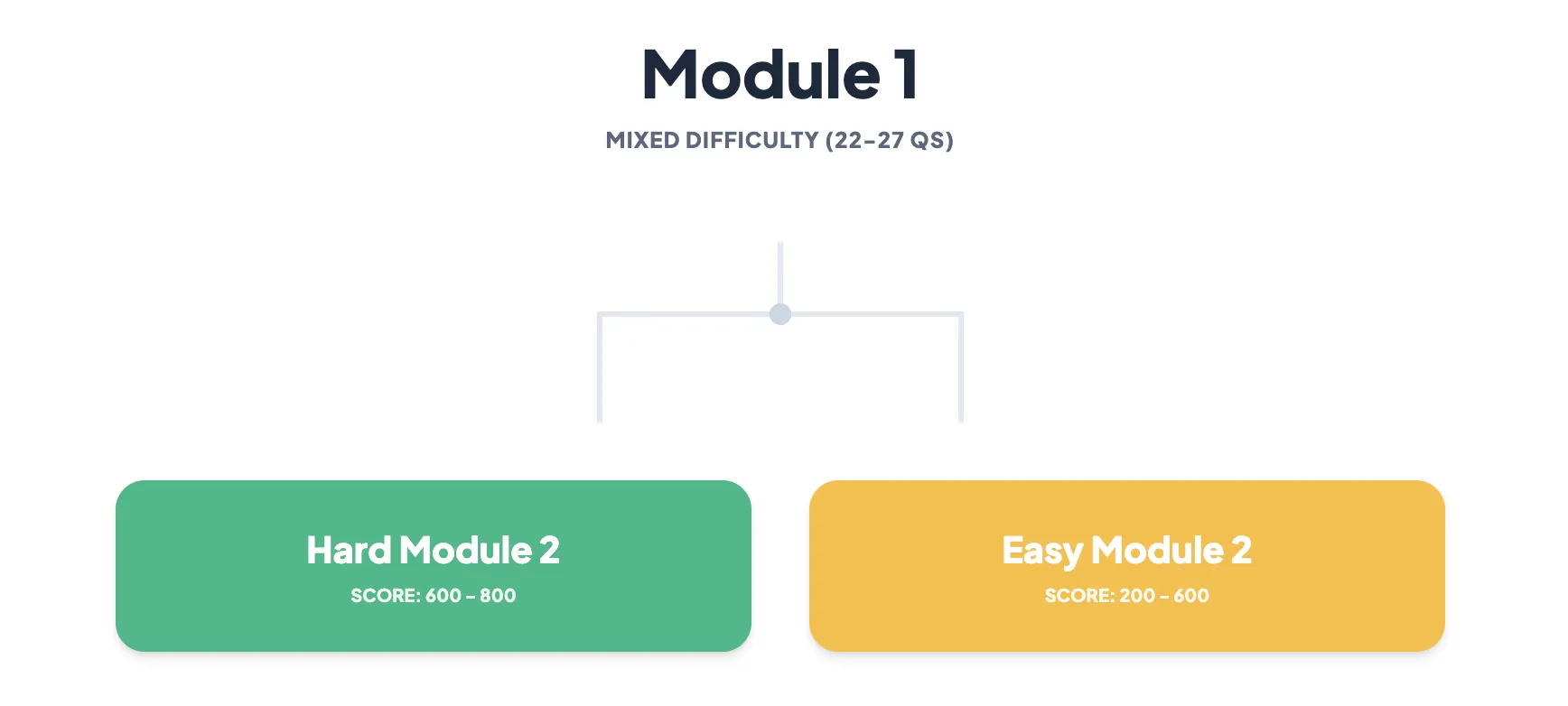
Each module contains around 27 questions (Reading & Writing) or 22 questions (Math). You complete Module 1 first. The College Board's algorithm then evaluates your performance and routes you to one of two versions of Module 2: a harder set or an easier set.
This is called a multistage adaptive test (MST) — it adapts between stages (modules), not between individual questions like some other adaptive tests.
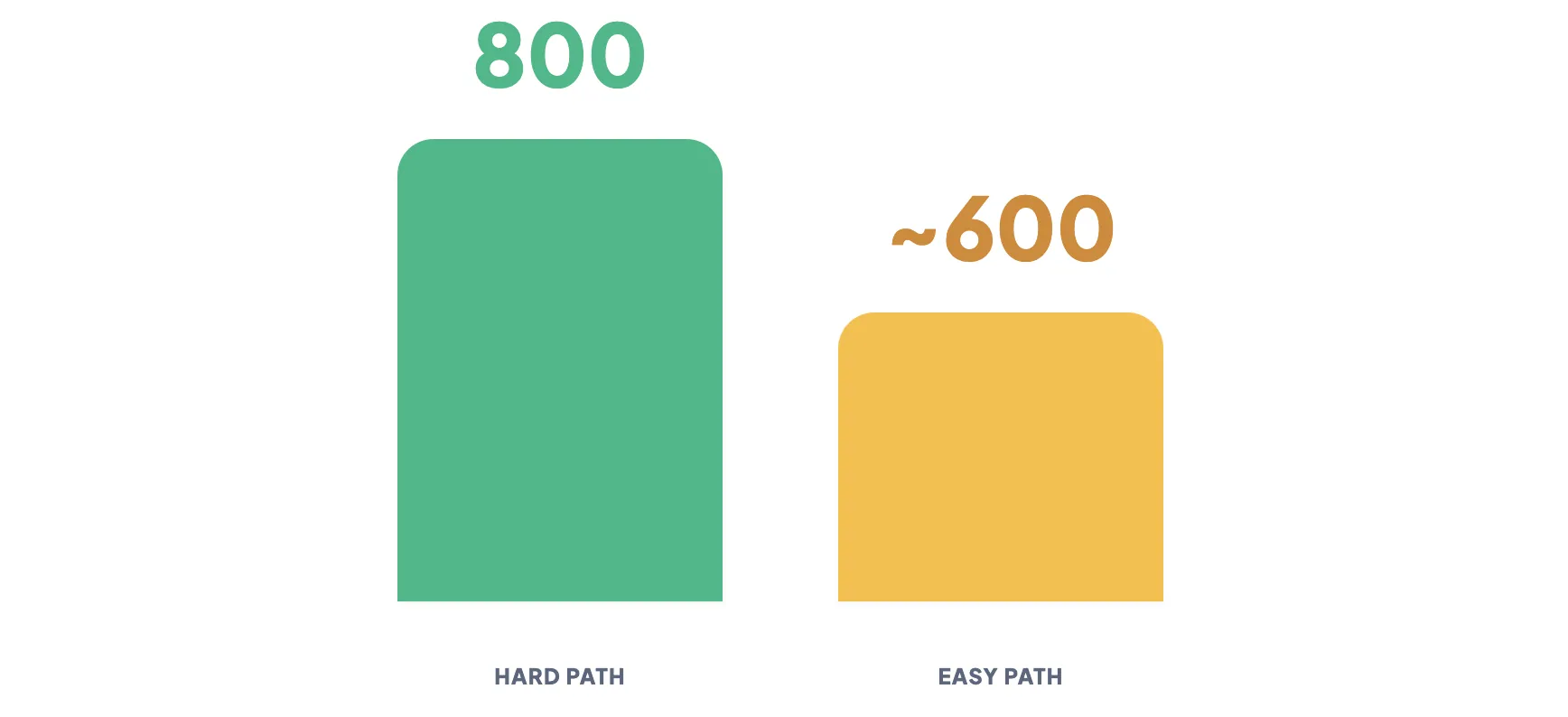
Here's what most students don't realize: the scoring tables are different for each Module 2 path. The hard Module 2 has a higher score ceiling. The easy Module 2 has a lower one. You can't score 1600 if you get routed to the easy version — the math simply doesn't allow it.
The threshold that matters most
You don't need a perfect Module 1 to unlock the hard Module 2. Research and test-taker data consistently point to a threshold of roughly 70–80% correct in Module 1 as sufficient to get routed to the harder path.
That's approximately 19–22 out of 27 questions correct in Reading & Writing, and 15–18 out of 22 in Math.
This has two critical implications:
First: You don't need to panic over every difficult Module 1 question. Missing 5–7 questions and still getting routed to the hard Module 2 is entirely achievable.
Second: Spending 4 minutes on a single hard question early in Module 1 — and running out of time on 3 easier questions at the end — is a much bigger mistake than it looks. Each of those skipped easy questions is a direct vote for the easy Module 2 path.
How Module 2 difficulty affects your score
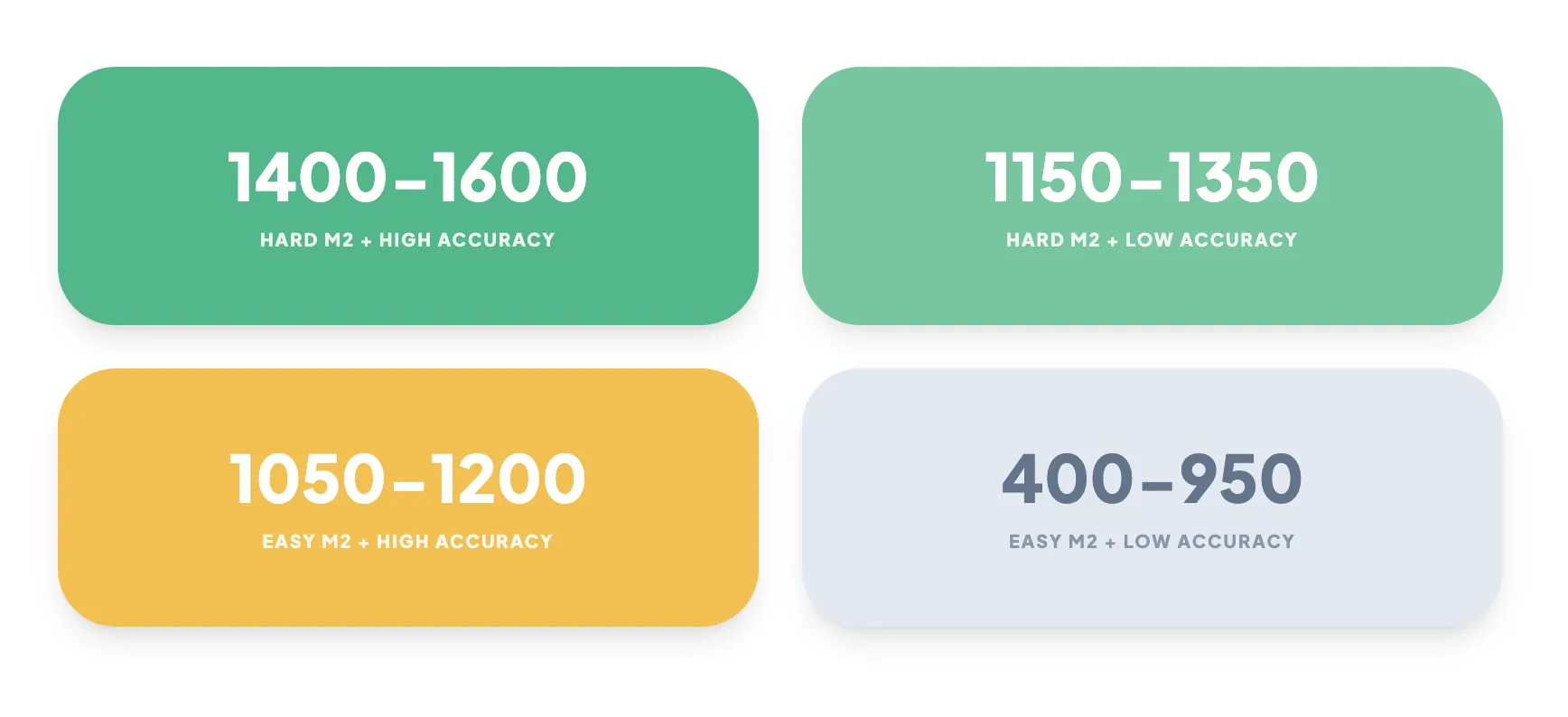
Here's the counterintuitive part that trips people up: getting routed to the hard Module 2 and scoring 60% correct will beat getting routed to the easy Module 2 and scoring 90% correct.
The hard path rewards you even for partial performance. The easy path punishes you even for strong performance — because the ceiling is simply lower.
This means the optimal strategy is not "get everything right." It's "get enough right in Module 1 to unlock the hard Module 2, then perform as well as possible from there."
What changes between the two Module 2 paths
Students who have taken the digital SAT and reported their experience consistently describe the following differences:
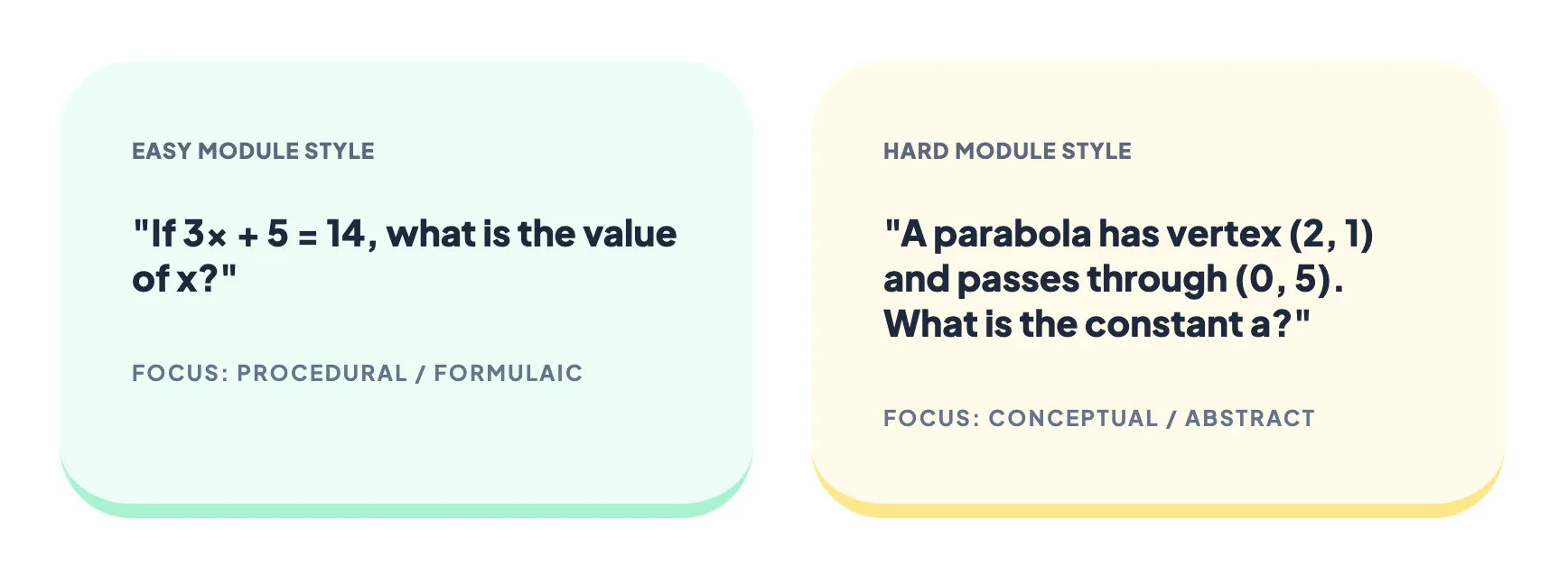
In the hard Math Module 2, expect more nonlinear systems, more multi-step word problems, more abstract function behavior, and more questions requiring synthesis across multiple concepts rather than applying a single formula.
In the easy Math Module 2, questions are more procedural — apply this formula, solve this equation — with fewer compound steps.
In the hard Reading & Writing Module 2, passages tend to be denser and from more complex source material. Questions about rhetoric, purpose, and subtle word choice appear more frequently. Evidence-based questions require closer reading.
In the easy Reading & Writing Module 2, the passages are more straightforward and the questions more literal.
Neither version is impossible. But if you're aiming for 1400+, you need to be in the hard module and performing well there. Practicing only with easy material won't prepare you for it.
The time structure you're working with
The full digital SAT takes approximately 2 hours and 14 minutes of testing time, broken into four modules:
| Module | Questions | Time |
|---|---|---|
| Reading & Writing — Module 1 | 27 | 32 min |
| Reading & Writing — Module 2 | 27 | 32 min |
| Math — Module 1 | 22 | 35 min |
| Math — Module 2 | 22 | 35 min |
That works out to roughly 71 seconds per question in Reading & Writing and 95 seconds per question in Math.
This is tighter than most students expect, especially since the digital format doesn't let you move between sections. Once you submit a module, it's locked. There is no going back to Reading & Writing once you're in Math.
The implication: treat each module as its own self-contained test with its own pacing discipline. Don't assume you'll make up time later.
Five strategic adjustments for the adaptive format
1. Prioritize Module 1 accuracy above raw speed
In a fixed test, leaving a hard question blank to save time is a neutral decision — you'll get roughly the same number of points regardless. In the adaptive SAT, a wrong or blank answer in Module 1 has a compounding cost: it pushes you toward the easy Module 2 path and lowers your score ceiling for the entire section.
This doesn't mean spending infinite time on hard questions. It means being strategic: flag hard questions, complete the easy ones, then return. Never let the clock run out with easy questions left unanswered.
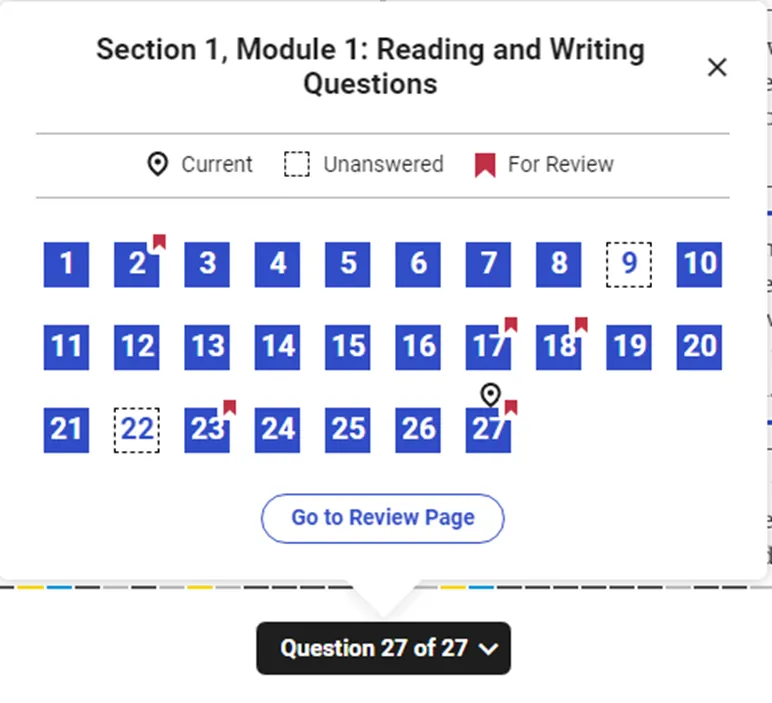
2. Use the built-in flagging tool
The digital SAT interface includes a flag/mark feature that lets you mark questions for review within a module. Use it aggressively. First pass: answer everything you can do in under 60 seconds. Flag anything requiring real thought. Second pass: work through flagged questions with remaining time.
This guarantees you're not losing easy points because a hard question ate your clock.
3. Never skip Module 2 calibration
After Module 1, you'll have a short break before Module 2. In that break, you won't know which version you've been routed to — the interface doesn't tell you. Don't try to guess. Don't let the perceived difficulty of Module 2 questions destabilize your approach.
If Module 2 feels hard: you're probably in the right place. Perform steadily. If Module 2 feels easy: execute cleanly and don't rush — accuracy still matters.
4. Adjust your practice accordingly
Most third-party SAT prep materials are built for the old paper test. They don't replicate the adaptive routing, the Bluebook interface, or the module-by-module timing structure.
The only tool that authentically simulates the digital SAT experience is the College Board's Bluebook app, which is free. Run all your full-length practice tests there. When you review, track your Module 1 accuracy separately from your Module 2 accuracy — they tell you different things.
5. Build Module 1 endurance, not just knowledge
One underappreciated effect of the adaptive format is psychological: Module 1 carries more strategic weight than Module 2, but it comes first — when you're freshest but also most anxious. Some students burn mental energy overthinking early questions and arrive at Module 2 depleted.
Practice starting strong. In your mock tests, treat the first module as the one that matters most. Build the habit of focused, steady pacing from question one.
What this means for your study plan
The adaptive format doesn't change what you need to know — the content is the same algebra, grammar, and reading comprehension it's always been. What it changes is how you practice and how you perform on the day.
Concretely:
- Do all full-length practice on Bluebook, not paper
- Track Module 1 accuracy as a separate metric in your error log
- Practice under timed, module-by-module conditions — not open-ended
- Study the hard question types specifically, since they determine your Module 2 ceiling
- Build a consistent first-pass / second-pass rhythm within each module
If you want a structured daily drill system that keeps you sharp on the question types that actually move your Module 1 accuracy, that's exactly what LockedIn was built for. Free, no tutor required, problems delivered on your schedule.
The short version
The digital SAT routes you to a harder or easier Module 2 based on your Module 1 performance. The hard path has a higher score ceiling — you can't reach 1400+ without it. Aim for 70–80% correct in Module 1, use the flag tool to protect easy questions from time pressure, and do all your practice on Bluebook. The adaptive format isn't something to fear — once you understand it, it's something to engineer.
Start drilling for free at lockedin.study →
Related: How to study for the SAT effectively: the no-BS blueprint
LockedIn is a nonprofit SAT prep platform — free forever, built for students who are serious about their score. Get started at lockedin.study.
Enjoyed the read?
Join 10,000+ students getting elite SAT drills every morning at 5:00 AM.